
Almond Butter as a Premium B2B Ingredient: Sourcing and Specifications
The global almond butter market is growing rapidly as food manufacturers seek clean-label, high-protein alternatives to conventional spreads and ingredient bases.
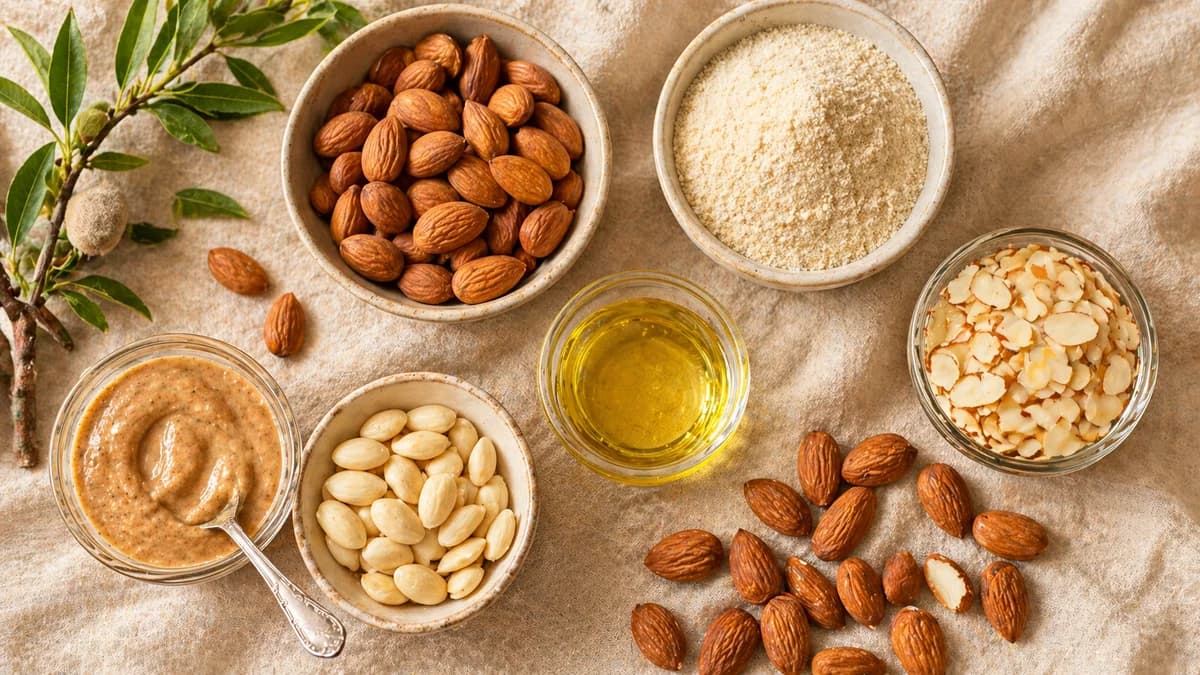
Almond Butter's Rising Role in Food Manufacturing
Almond butter has moved beyond specialty natural food stores to become a core ingredient in mainstream food manufacturing. It appears in protein bars, meal replacement shakes, infant nutrition formulations, bakery fillings, ice cream swirls, confectionery coatings, and snack applications. For B2B buyers, the key questions are quality consistency, oil separation control, microbiological safety, and allergen management.
Types of Almond Butter Available for B2B
Industrial almond butter comes in several key variants. Raw almond butter is made from unroasted almonds — it has a milder flavor and lighter color, suitable for clean-label applications where roasted notes would be undesirable. Roasted almond butter offers a deeper flavor profile and is used in confectionery and snack applications where aroma intensity is valued. Blanched almond butter (from skin-off almonds) produces a smoother, lighter-colored product ideal for premium spreads and confectionery fillings.
Stabilized almond butter contains a small percentage of palm or coconut oil to prevent natural oil separation, extending shelf life and improving consistency for commercial food production. Natural (unstabilized) almond butter contains 100% almonds and is preferred by clean-label buyers, but requires temperature-controlled storage and use-by management.
Key Quality Specifications
B2B buyers sourcing almond butter should specify: almond variety (Nonpareil preferred for flavor), roast level (raw, light, medium, dark), oil stabilization (yes/no), particle size (smooth vs. chunky), moisture content (under 2%), aflatoxin limits (EU, US, or destination-specific), total plate count and yeast/mold specifications, and packaging format (pails, drums, IBC totes, or aseptic bulk).
Allergen Management
Tree nut allergen management is a critical consideration in almond butter production. Calmond Valley's processing facility maintains dedicated lines for almond products, with comprehensive allergen cleaning protocols, swab testing, and HACCP-validated procedures. Full allergen declarations are provided with each shipment.
Shelf Life and Storage
Unstabilized almond butter has a typical shelf life of 9–12 months when stored at 65–75°F in sealed containers. Stabilized product extends to 12–18 months. For bulk storage, temperature control between 50–65°F is recommended to slow rancidity development. All Calmond Valley almond butter is packed under nitrogen flush to minimize oxidation.
Minimum Orders and Packaging
Almond butter is available in 30 lb pails, 55-gallon drums (approximately 450 lbs), and 275-gallon IBC totes for large-scale food manufacturers. MOQ starts at 1 MT for standard product, with custom roast profiles and stabilization formulations available at 5 MT minimums.